

Founded in 2019 the Albatros Africa Foundation was established to consolidate our Corporate Social Responsibility activities. Through fundraising from our guests and donations from our various Albatros Travel businesses & relationships in South Africa, the Albatros Africa Foundation funds a variety of projects.
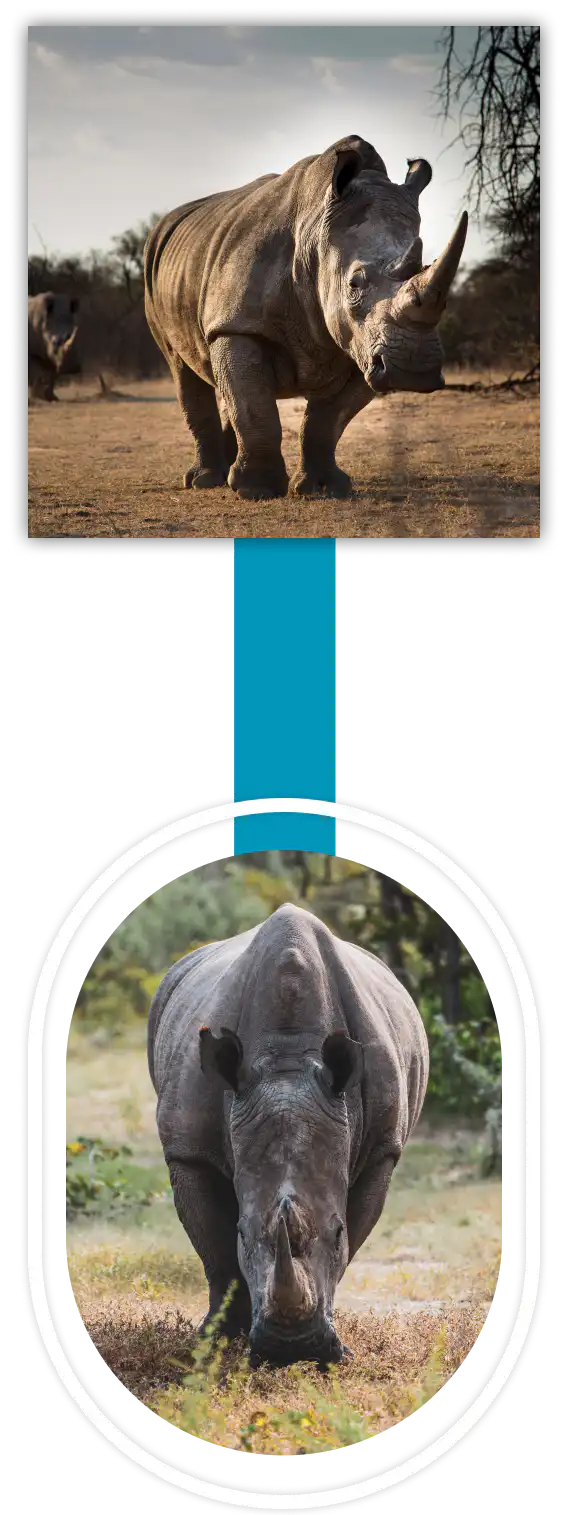
According to the International Union for Conservation of Nature (IUCN), the Black Rhino (Diceros bicornis) is listed as Critically Endangered with only approximately 5,042 – 5,455 individuals left across Africa today. This species made a comeback from the brink of extinction about 20 years ago where the population was around 2,500 individuals. Poaching and habitat loss is the main driver for the decline of this species, and it is our responsibility to ensure their safety and survival for the benefit of future generations.
And so, Albatross Africa recently embarked on a new conservation journey, in collaboration with The Rhino Orphanage, in starting up a Black Rhino Breeding Project on a private game reserve in Limpopo. For years there had been a single Black Rhino cow on the private game reserve until 2019 when Albatros CEO, Søren Rasmussen, had decided to purchase her a mate in the attempt to assist the meta-population.
The Black Rhino bull arrived in July 2019 and has since then established well in his new environment, as well as introducing himself to his mate. The two have been seen together on numerous occasions, however, due to the typical behavior of a Black Rhino, who enjoys the cover of the thickets, we might never know if any mating attempt had occurred between the two. The bull is still fairly skittish in his new home and not completely trusting of vehicles or people, however, he now has ample space to move about freely and hide whenever he feels pressured for any reason.
In order to ensure the wellbeing and safety of these magnificent creatures, Albatros had employed a Rhino Monitor for the property whose daily duties are to relocate the Rhino’s and monitor them for a set period of time to ensure that there are no injuries, illnesses or uncommon behavior. With this appointed Rhino Monitor we hope to know when a mating had occurred between the two individuals and anxiously wait for 15 months, the gestation period until the mother has the calf.
We have already taken a step into the right direction by introducing the bull to the cow, success will be once that cow produces offspring and we have a hand in supporting the dwindling population to grow in the wild so that people can preferably see these animals in the wild rather than in a zoo or on images seen on the internet.
UPDATE 2026:
Our Black Rhino cow has been in contact several times with the other male on the property and her conservation story is an inspiration to us and all the guests visiting the nature reserve, as she has now become mother of a total of three calves over the last 7 years. While she is not easy to spot, as most Black Rhinos due to their nature and preferred environment, the rangers still enjoy occasional sightings and she tends to be quite relaxed in the presence of cars and guests, as we strive to ensure guiding on the property is ethical towards the animal species of the bush. Our path ahead for our Black Rhino breeding project for the near future includes monitoring our individuals and assuring they are in good health, as well as monitoring the genetic diversity of our small Black Rhino population, with potential for new individuals to be moved/introduced in the area.
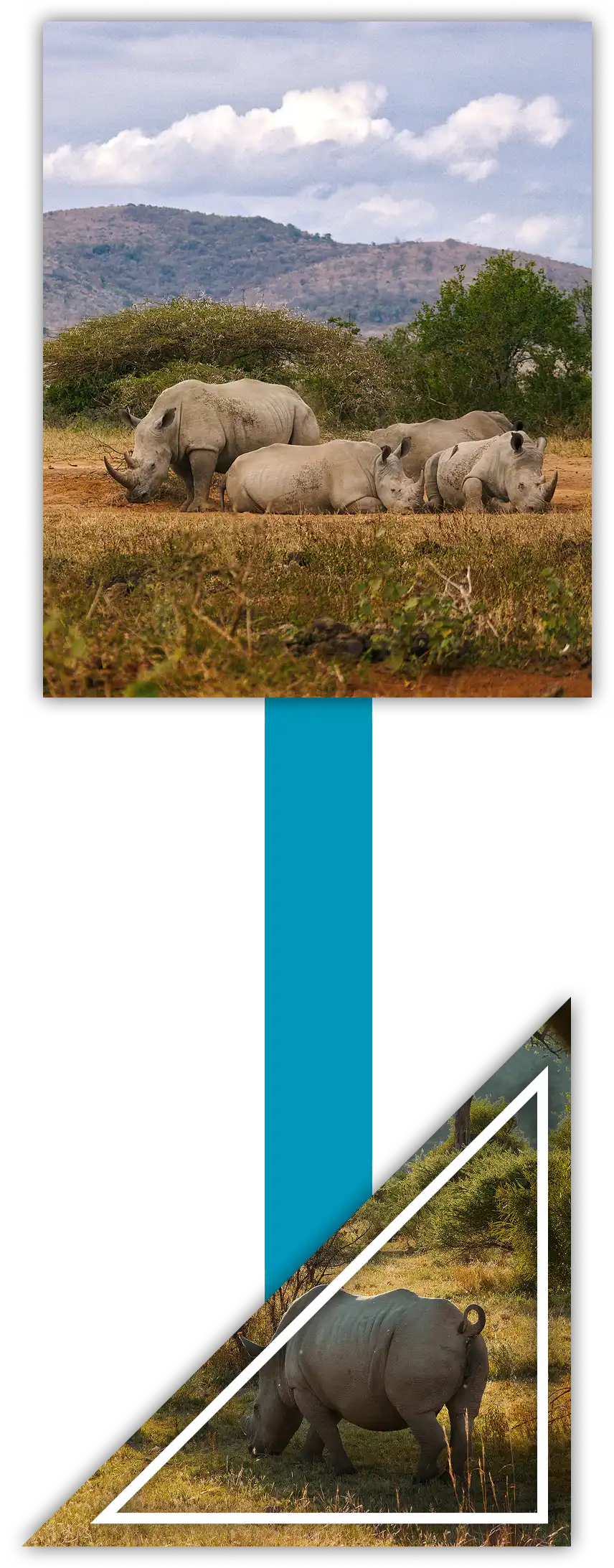
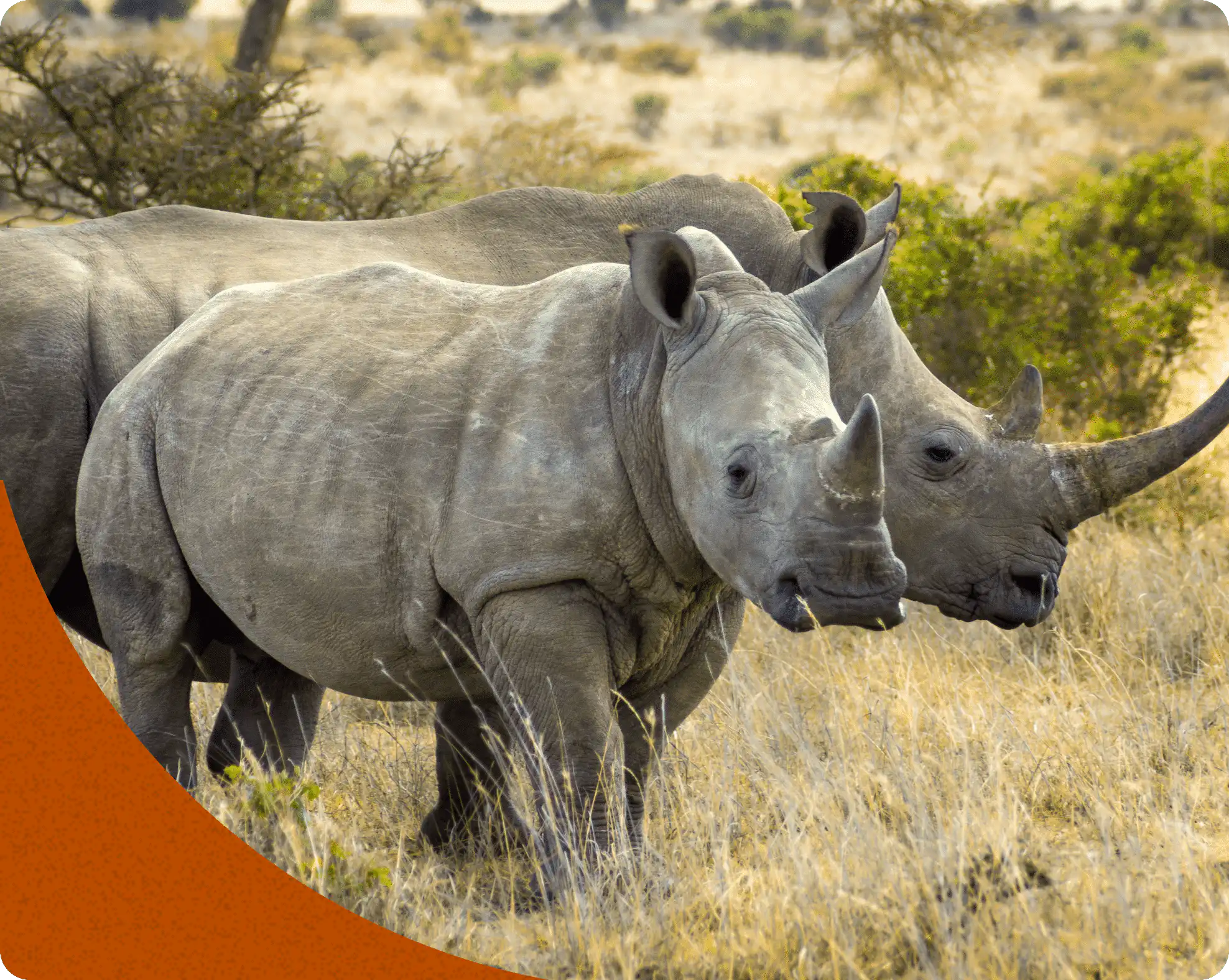
About one year ago Albatros in collaboration with The Rhino Orphanage, has taken a major step into releasing a few sub-adult orphaned White Rhino’s onto a private game reserve in Limpopo taking the very last step in their rehabilitation phase of becoming “wild” Rhino’s. Sadly the reason why these rhinos were orphaned is due to greed and status in Southeast Asia, poaching for the horn.
These released Rhino’s, and many others who are still in Rhino Orphanages across South Africa, all lost their mother in the most horrific way anyone can imagine. The mother is brutally murdered or sometimes only wounded with a gunshot and their horns hacked out of their faces while the little calves are helplessly standing by trying to protect their mother, to no avail, and sometimes getting injured themselves. Fortunately, the majority of the times these calves are found and immediately translocated to a Rhino Orphanage where the facilities are well prepared to hand-raise these calves and eventually release them back into the wild.
Albatros had appointed a full-time Rhino Monitor whose daily duties are to relocate the population and ensure that all of them are safe with no serious injuries and also to assess their behavior in their new home.
This final step of releasing orphaned rhinos onto a private game reserve will, in the long run, aid the meta-population if bulls and cows can produce offspring of their own. Due to this release being one of the first of its kind, where orphans are introduced to a resident population on the private game reserve, a behavioral study was conducted to compare the orphans’ behavior to that of the resident wild rhinos.
The study was conducted from March 2019 until February 2020, where a Behavioural Ecologist and the Rhino Monitor located the Rhinos on a daily basis and spent ten minutes per Rhino noting its behavior and interactions between their fellow orphans and residents. The goal of this study is to see if the orphans behave the same as what wild Rhino’s do, and make informed decisions on whether or not they can be released into an area where there are game drive pressures of vehicles, or if they should rather be released in an area where there is no interaction with them whatsoever.
Due to the poaching crisis in Southern Africa, it will depend on the orphans to allow the population to bounce back and increase steadily in a safe environment where they are protected and cared for.
UPDATE 2026:
As of 2026, our re-wilded orphans have been doing remarkably good in their new home and many of them have become mothers or fathers of new Rhino calves, thus ensuring that their re-introduction in nature will also be contributing to the recovery of Rhino populations in a time when poaching challenges are still a significant problem in South Africa´s nature reserves. We have also observed “couples” where both the father and the mother of a new calf were orphans – it is remarkable how much our Rhinos can adapt to life in a Big-5 nature reserve even though they have had trouble in their early life and lost a mother.
Your support helps ensuring that we can contribute financially to our Rhino conservation and research projects as well as to the Rhino Orphanage, which can be surprisingly expensive to run and maintain as the orphans need to be provided with daily food and veterinary care for some time.
The path ahead for our White Rhino projects include improving our monitoring capability through new technologies so to keep our endangered animals safe from the threat of poaching and understand even better their biology and behaviour in a natural context.
Chosse Custom Amount:
Chosse Custom Amount:
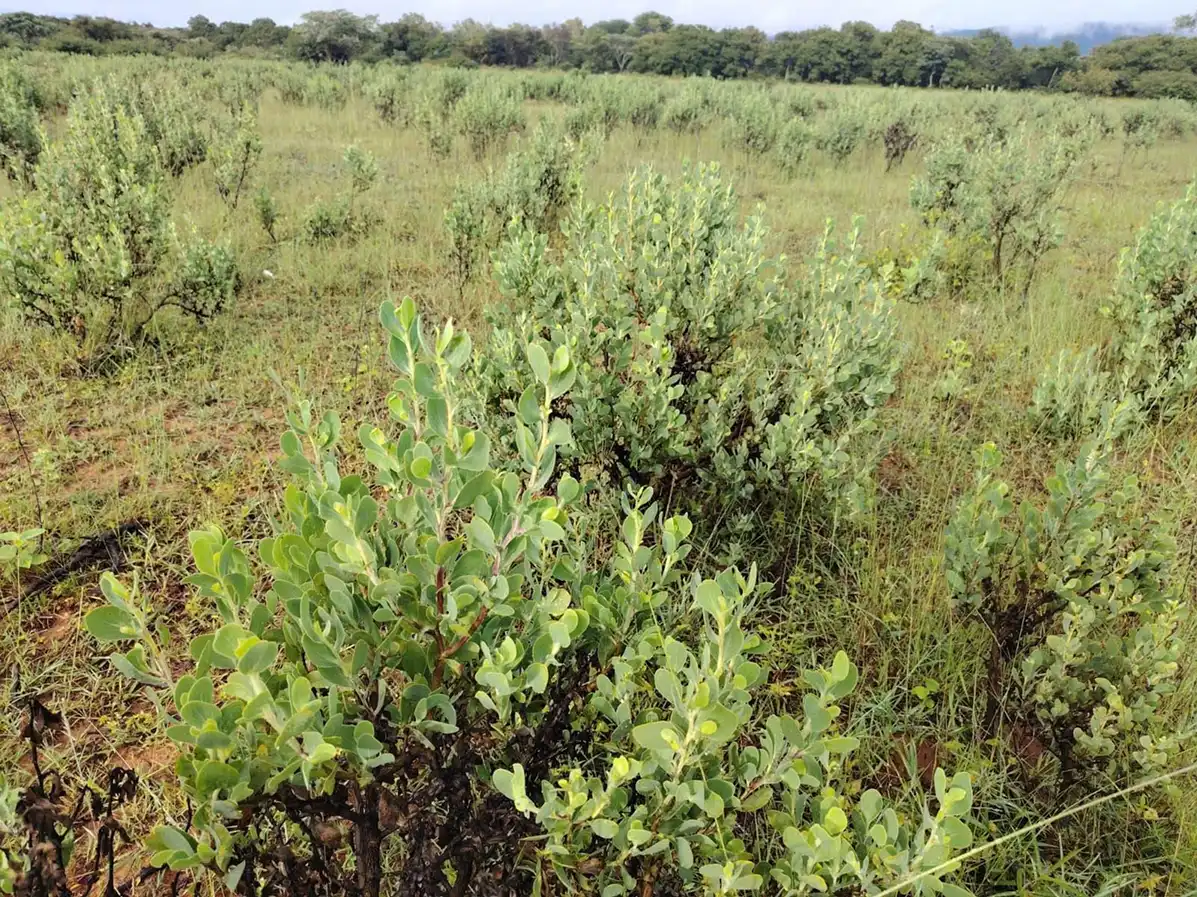
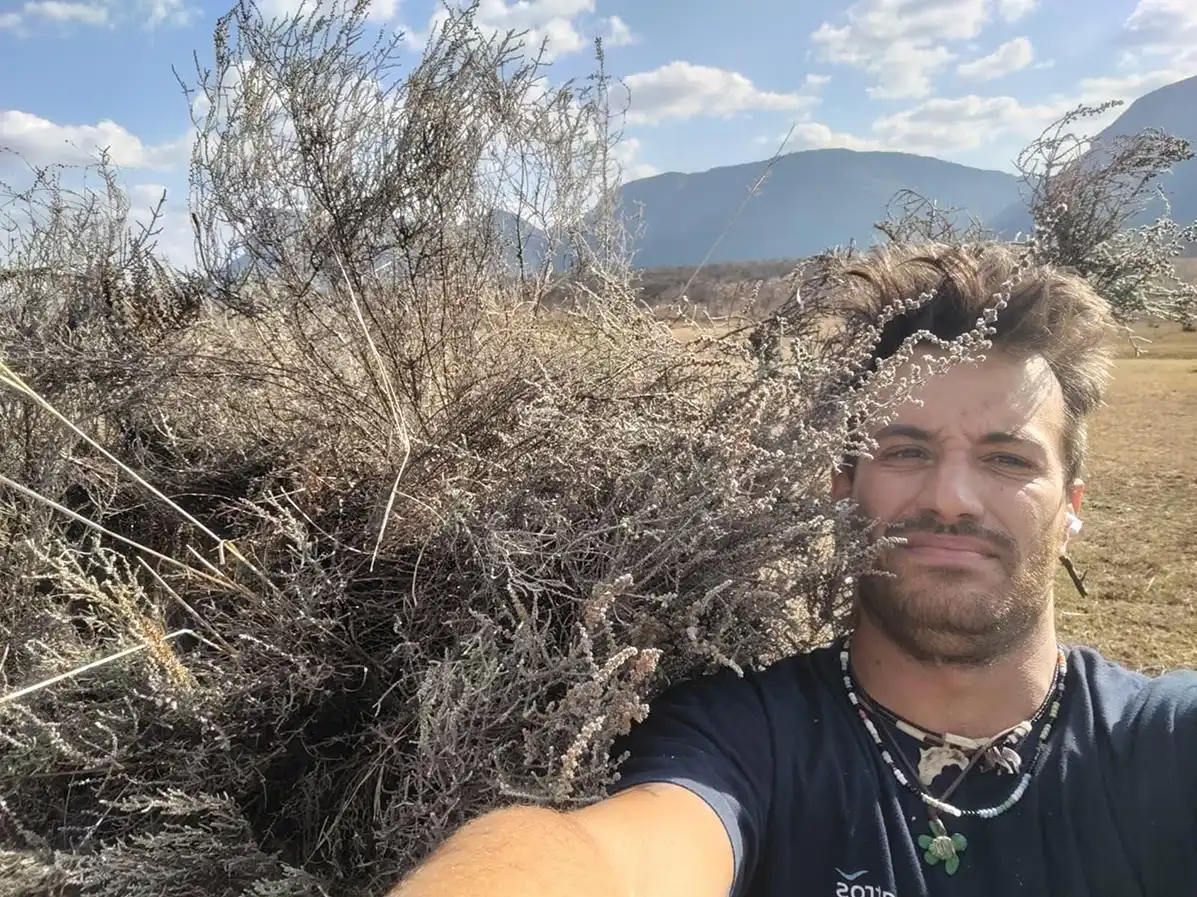
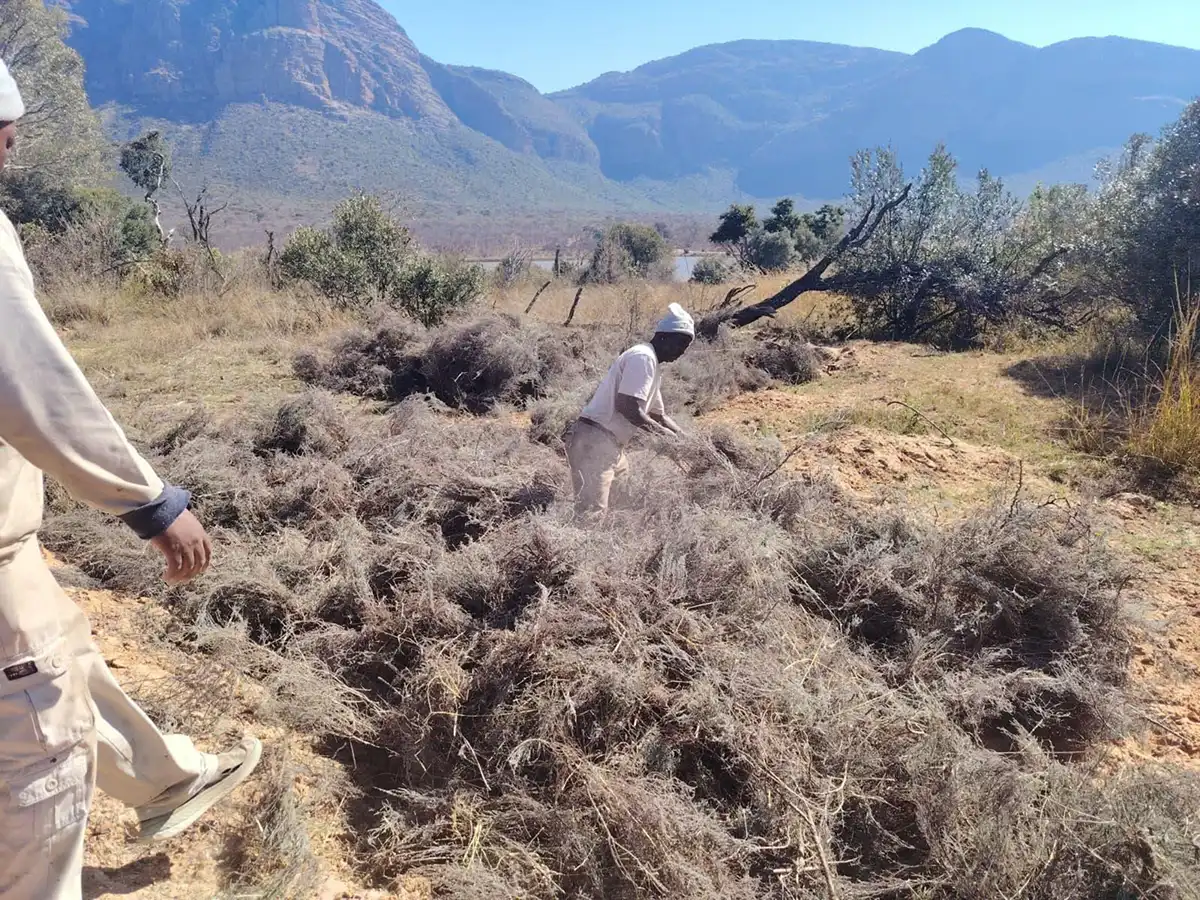
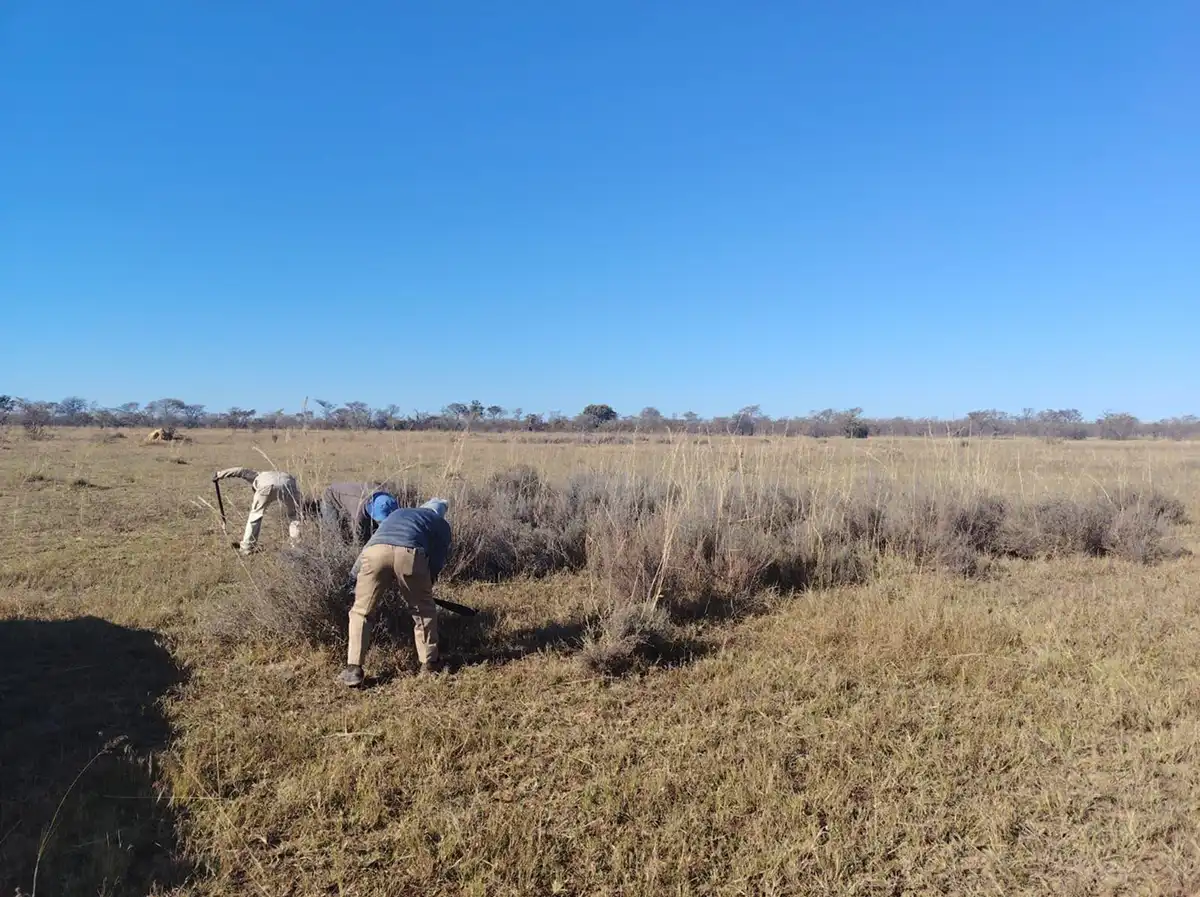
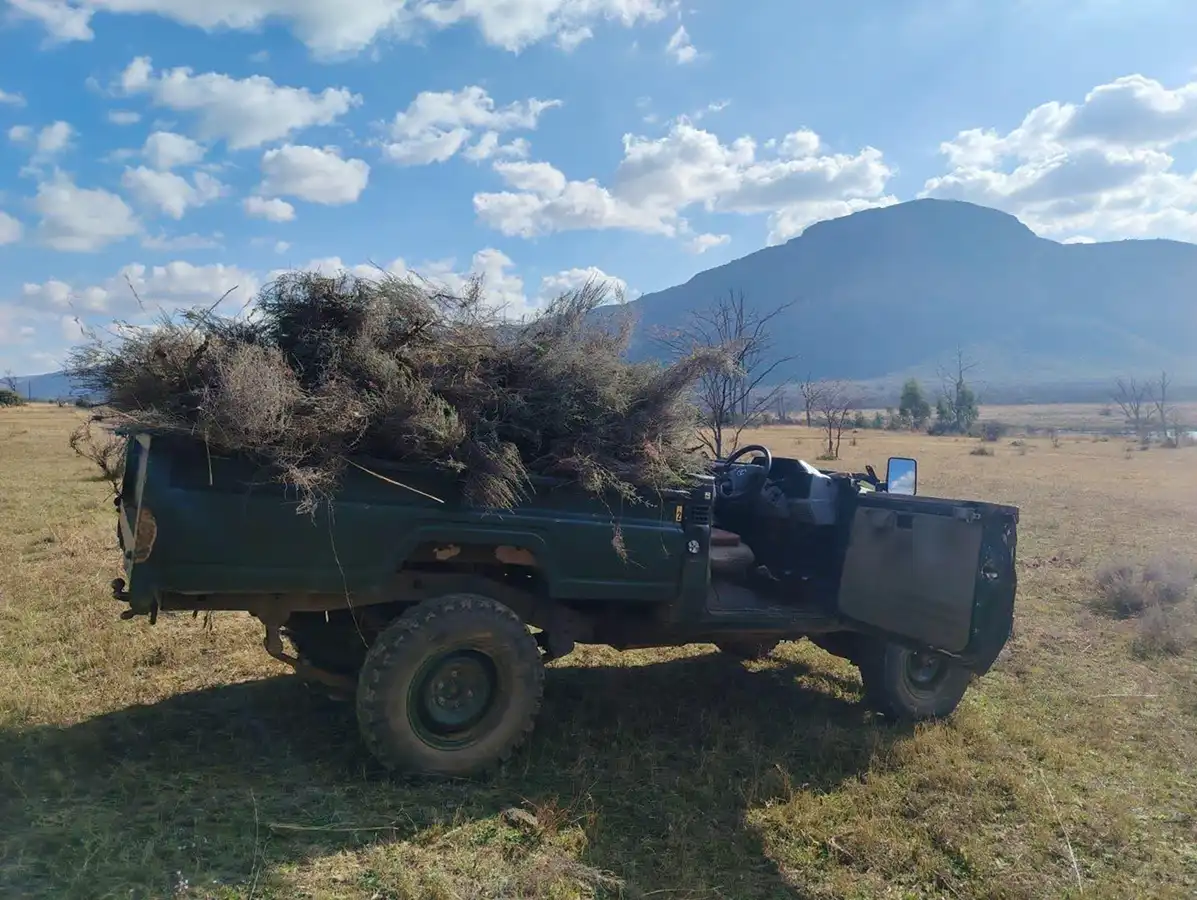
A recent add-on in our conservation portfolio is the growing effort to map and control the spread of encroaching plant species that can damage the ecosystem in the bushveld areas where our company operates and that our guests visit.
While not a “fashionable” conservation cause like rhinos or cheetahs, the control of such species is of great value as these plants will usually spread fast and cover vast areas of the bush. This leads to the disappearance of very important species of grasses and other plants that might be endangered or more palatable for the herbivores – as, in most cases, encroaching species are not eaten by any animals and do not therefore contribute heavily to the food chain of a park. Similar problems are experimented with alien species, also called invasives, that originally come from other continents and have no natural enemy. They tend to outcompete and kill the local vegetation and therefore also represent a problem for the health of an ecosystem.
Examples of encroaching species include the fluff-bush and the bankrupt bush, while alien species do include, for example, the Eucalyptus or “blue gum”.
The staff working at our Honeyguide camps has therefore started to map and control the spread of these plants and trees, usually through manual removal and control, and is looking into expanding these projects on a larger scale in partnership with local stakeholders as well as universities.
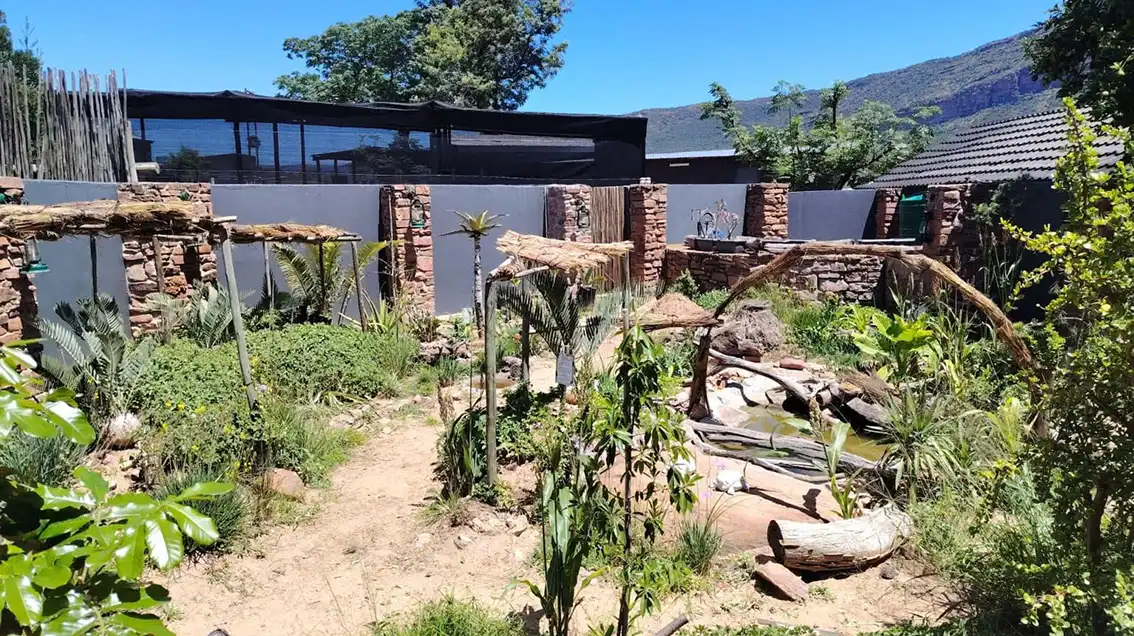
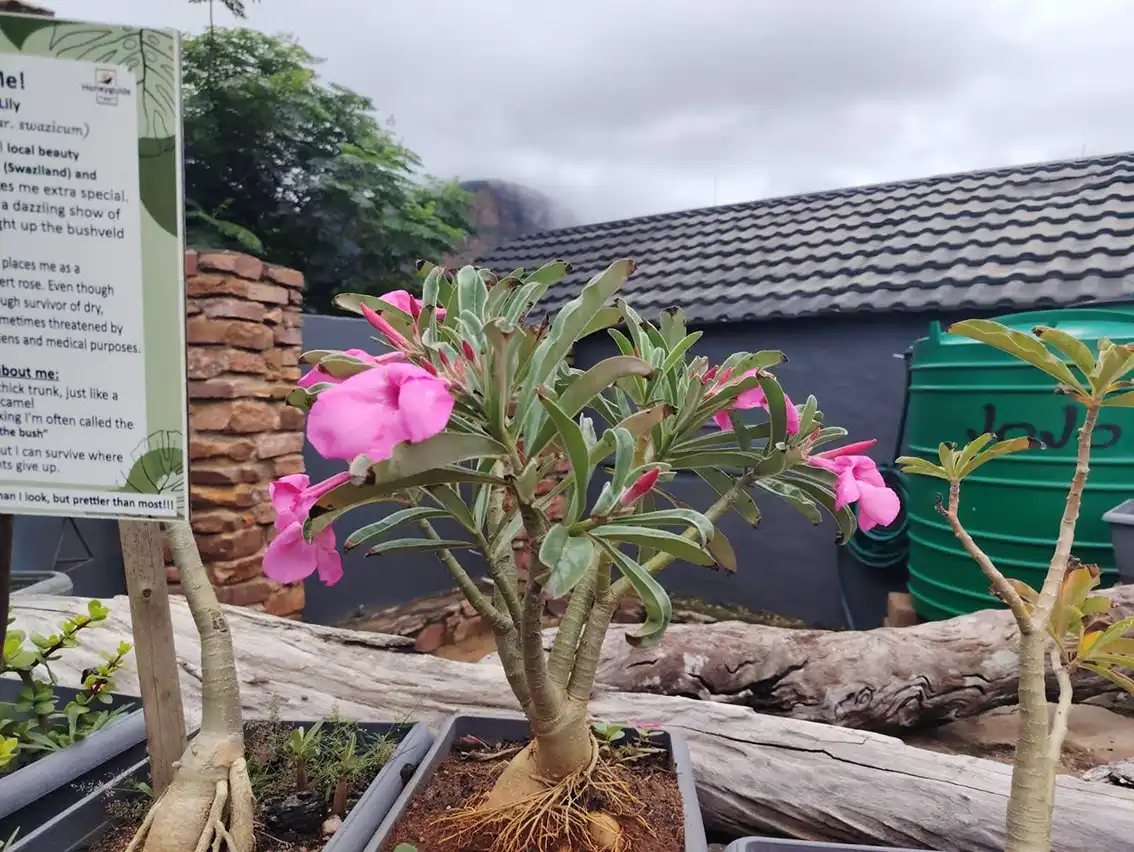
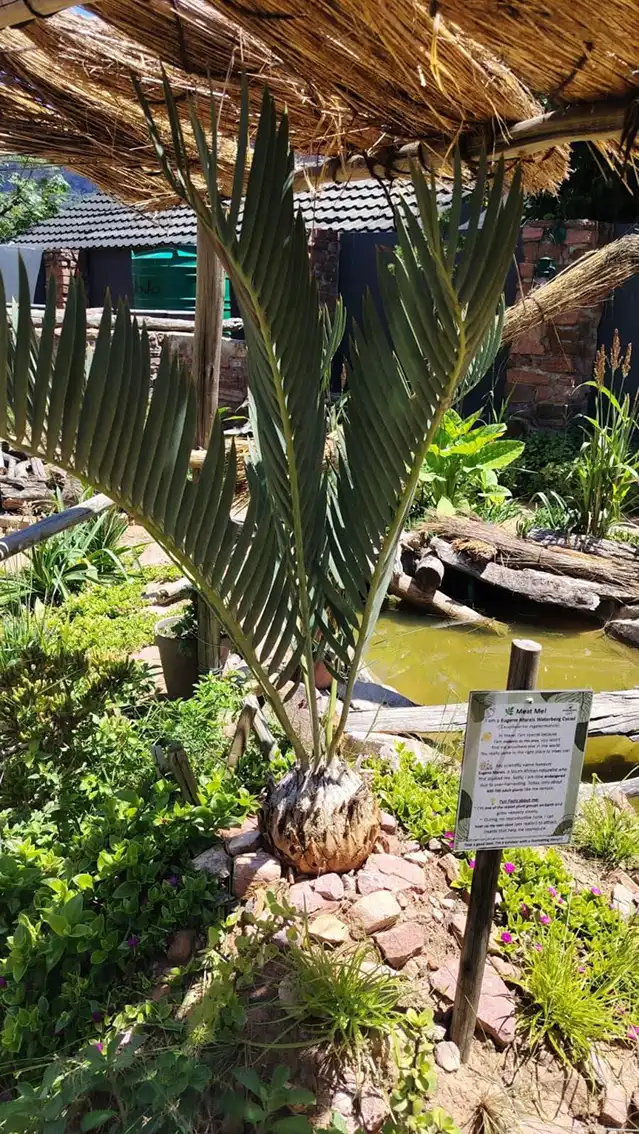
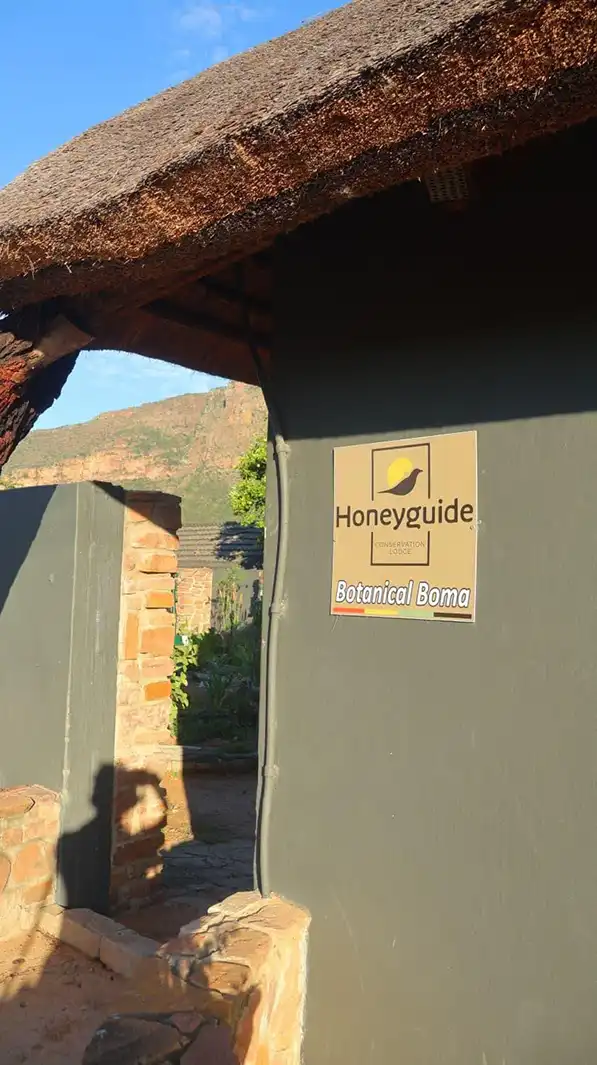
The Albatros Africa Foundation has been financing the conservation of indigenous plant species of South Africa by establishing a “Botanical Boma” in Honeyguide Conservation Lodge, the newest lodge of our portfolio.
As the old boma of Conservation Lodge was not being put to use anymore due to the lodge building a new outside venue under a majestic Fig Tree, we came up with the idea of building a garden in the old braai venue to give it a new purpose. Over less than 8 months of work, a total of more than 50 local plant and grass species have been added in the Botanical Boma.
While some of these have been added as they are endangered species (like our Waterberg Cycad or Swazi Lillies), others have been added due to their great significance in South Africa´s heritage (like the Yellowwood, the national tree of SA) or the medicinal effects they carry.
The garden is now home to several insects, leopard tortoises, frog and bird species, thus creating a little island of enhanced biodiversity in our private game reserve in the Waterberg.
A new garden will soon be built in our other camp in the Waterberg (Honeyguide Ranger Camp), with the same purpose of combining conservation of native plant species with creating awareness and enriching guest experience.
In collaboration with the Mpumalanga Tourism & Parks Agency, the Albatros Africa Foundation sponsor the maintenance and upkeep of anti-poaching aircraft, as well as provide staff assistance.
The MPTA (Mpumalanga Tourism & Parks Agency) manages the Manyeleti Game Reserve (Greater Kruger Park), where the Albatros Tented Safari Camps are located, Honeyguide Mantobeni & Khoka Moya Camp.
We cannot do this work alone. Consider setting up a once off or monthly donation to help extend our impact and keep rhinos thriving for generations to come.
You can sponsor an hour of flying for as little as 1300 ZAR
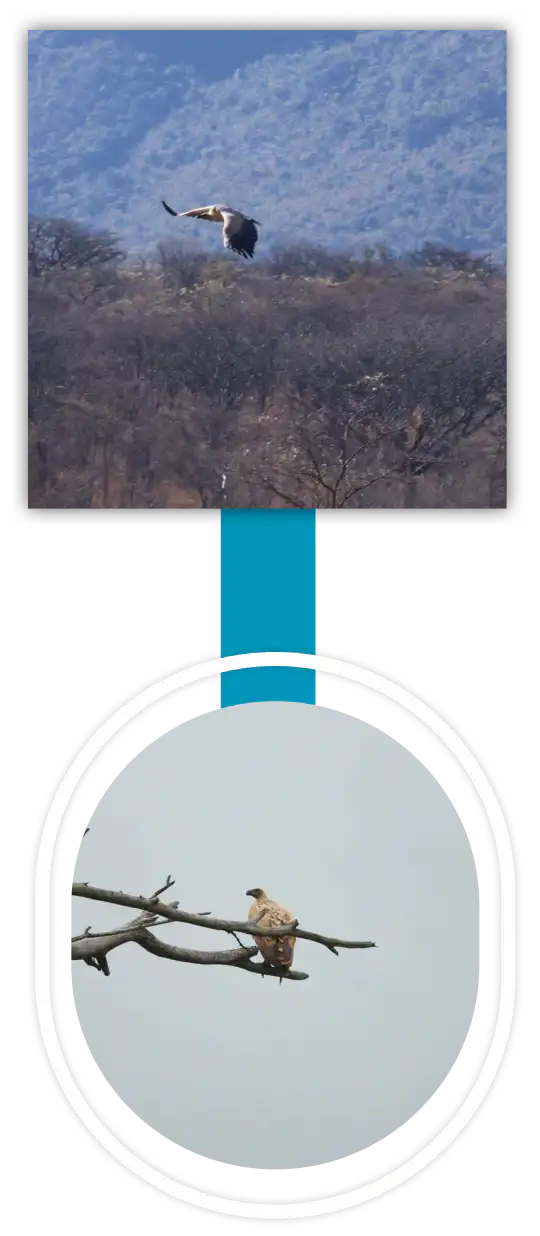
An important component of nature conservation in the bushveld is its birdlife. As part of the AAF´s efforts to conserve and restore natural landscapes, we are planning to start a vulture establishment or feeding site in a nature reserve in the Limpopo Province of South Africa, with a focus on White-backed vultures.
A vulture feeding site does require a certain level of prior assessment to understand its environmental impact, where to source the food and which location is ideal, but can in turn give significant benefits to the population of these endangered birds.
At the current stage, vultures are increasingly being killed either by poachers, by unintentional poisoning or by crashing on power lines. The reduction in vulture numbers is a serious issue for the ecosystem as they help to contain the spread of diseases and recycle the nutrients in the carcasses.
It is as well important to consider other key bird species such as the red- and yellow-billed oxpeckers in our efforts. These birds have a mutualistic relationship with herbivores and eat ticks of their skin. As they do breed up to three times a year and use the available cavities in trees, we will provide them with sisal nesting logs to offer more space for breeding in areas that have been damaged by past overgrazing and now need bird populations to recover.
Discussions in the future may include as well breeding projects for vulnerable bird species that represent an important part of SA´s birdlife heritage such as the Blue Crane or the Secretary Bird.
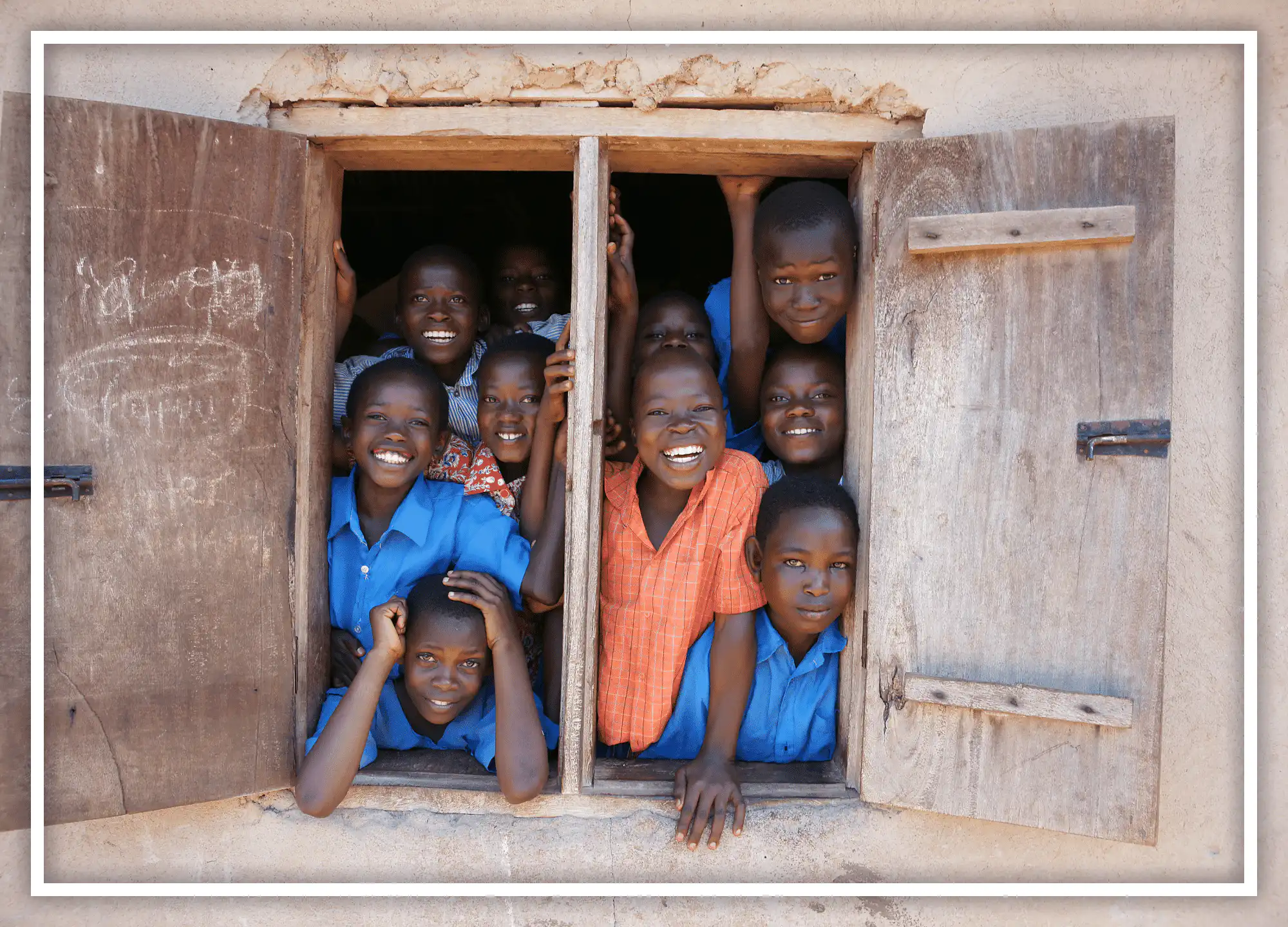
AAF works very closely with the Welverdiend community in the Province of Mpumalanga in collaboration with our two Tented Safari Camps, Honeyguide Khoka Moya & Honeyguide Mantobeni. The majority of our staff contingent (80%) come from the Welverdiend community, the Albatros Africa Foundation has been actively involved in building three classrooms at the Mtambeni primary school, as well as the local Community Hall. The AAF sponsors the annual Welverdiend league football(soccer) tournament and facilitates community visits from Honeyguide Khoka Moya and Mantobeni guests.
While not directly related to nature conservation, working together with the local community and supporting their initiatives is key to ensure our lodges have a positive impact on their surroundings.
Often times, the local community will be able to provide for a lower price both items that can be sold at our curio shops as well as food and beverage for our restaurants.
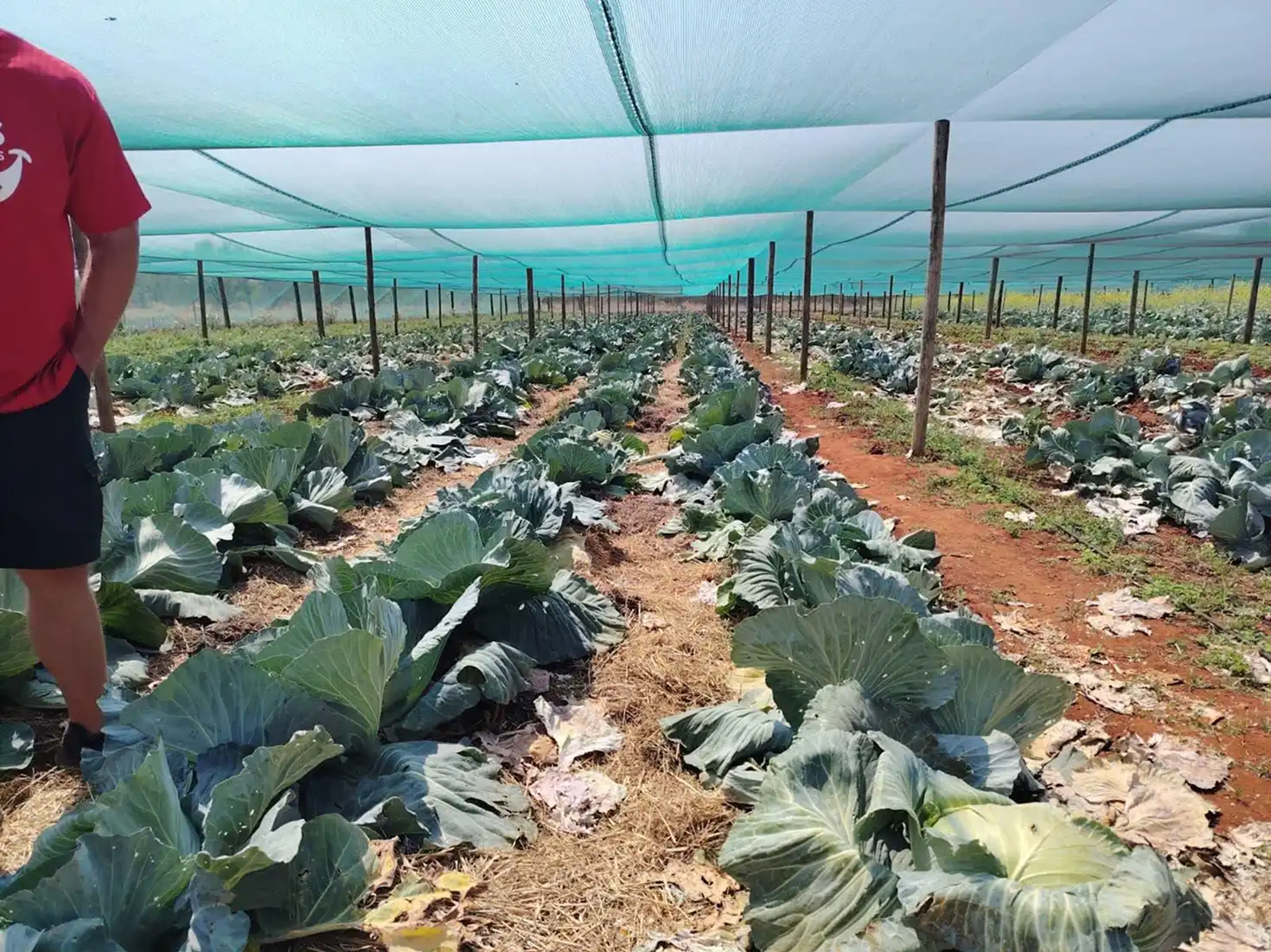
Around Entabeni, a safari conservancy where some of our activities are based, we have increasingly been sourcing our eggs and vegetables from local farms in the immediate surroundings of the reserve. Even more interesting is visiting the local sewing centre, which is managed by women from the villages nearby, and buying items for our curio shop that turn out to be quite popular, especially with overseas guests.
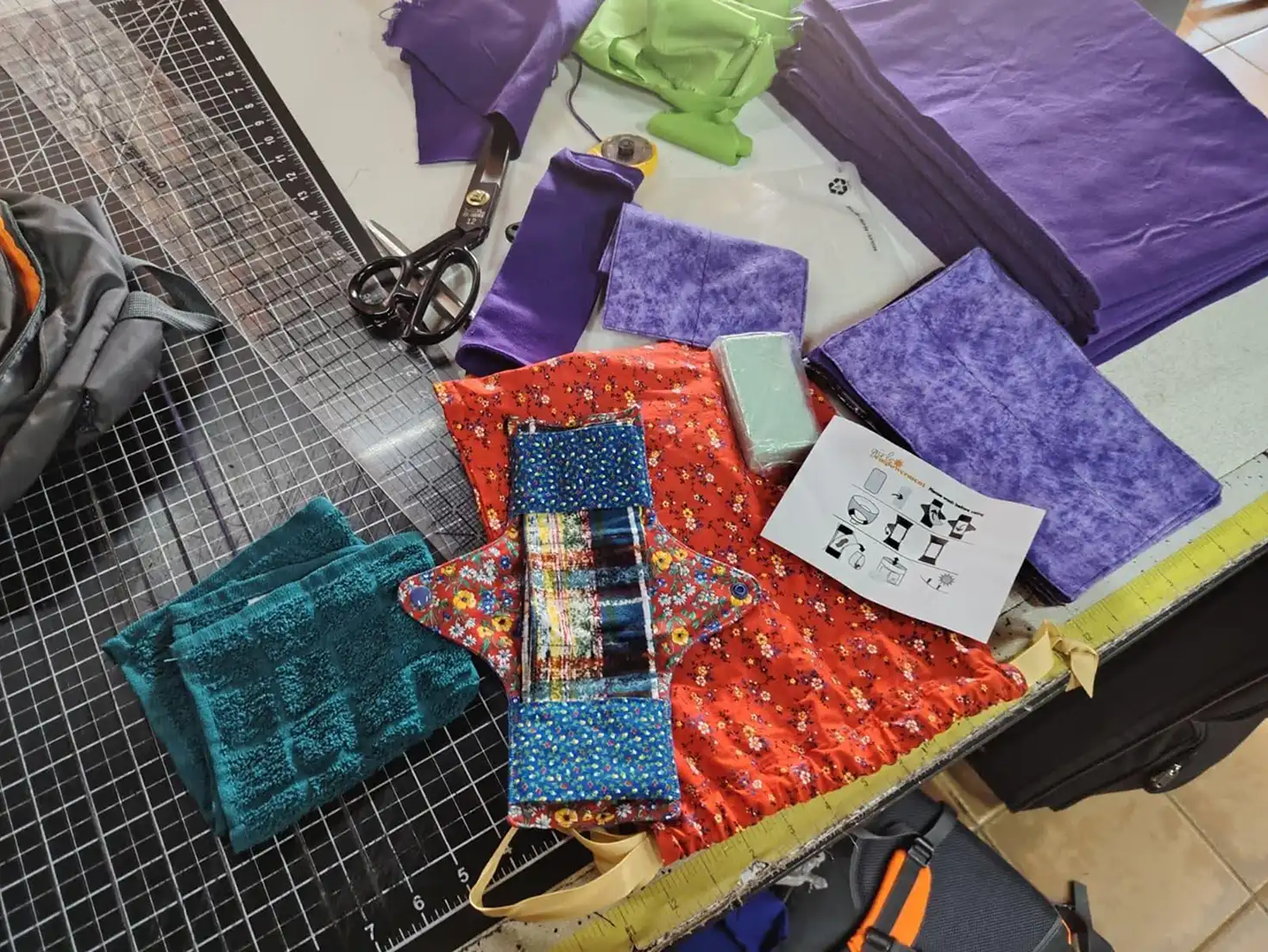
One of the initiatives that our guests can support is the “girl pack” – a women hygiene pack that is produced locally and distributed in schools to young girls in order to promote health awareness and personal hygiene in poorer communities.
In the future, we will look at extending our cooperation with the schools of the local community and potentially invite the local school kids for game drives in our lodges when possible, offering them an experience that often times they can not afford.
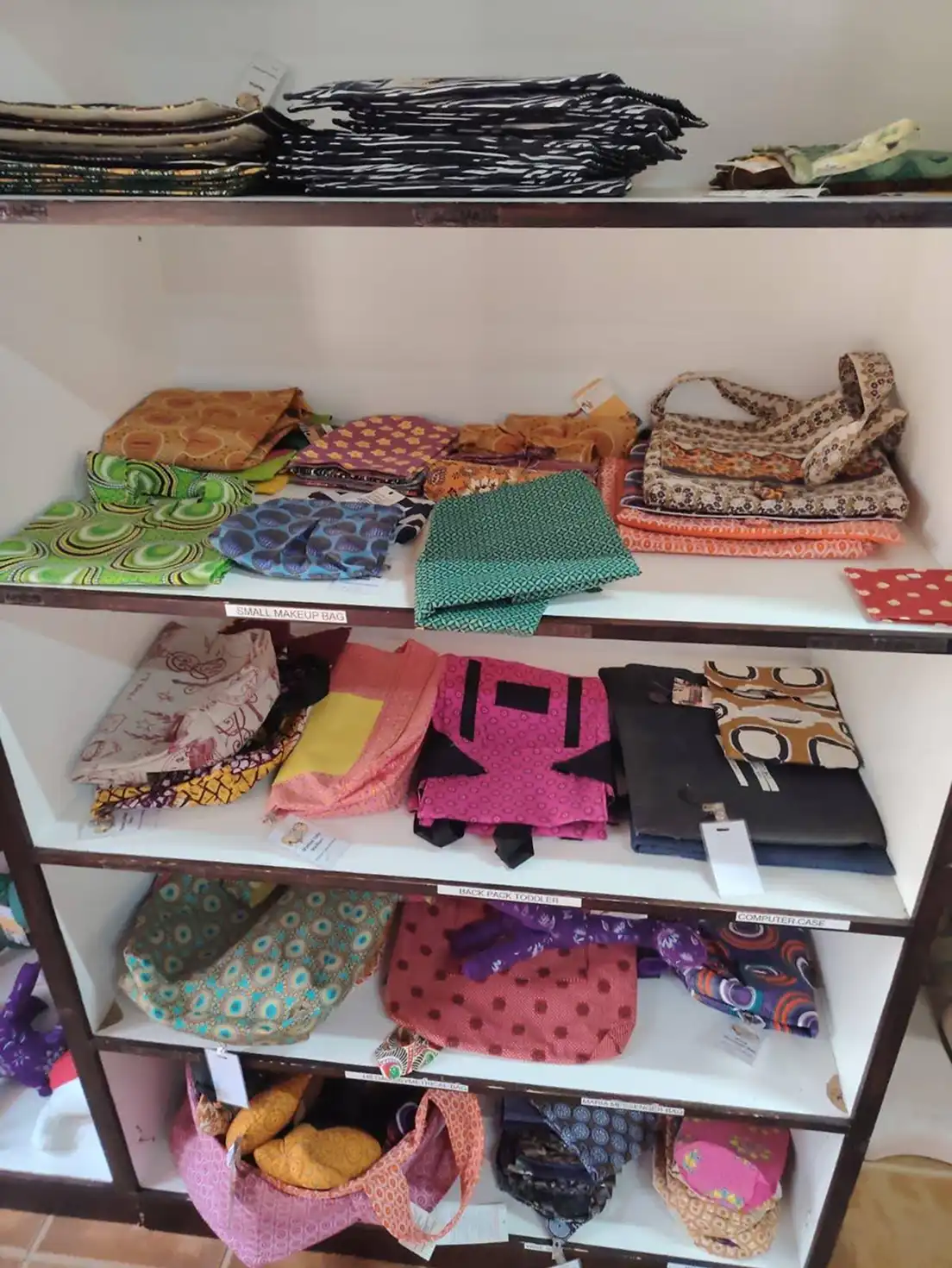
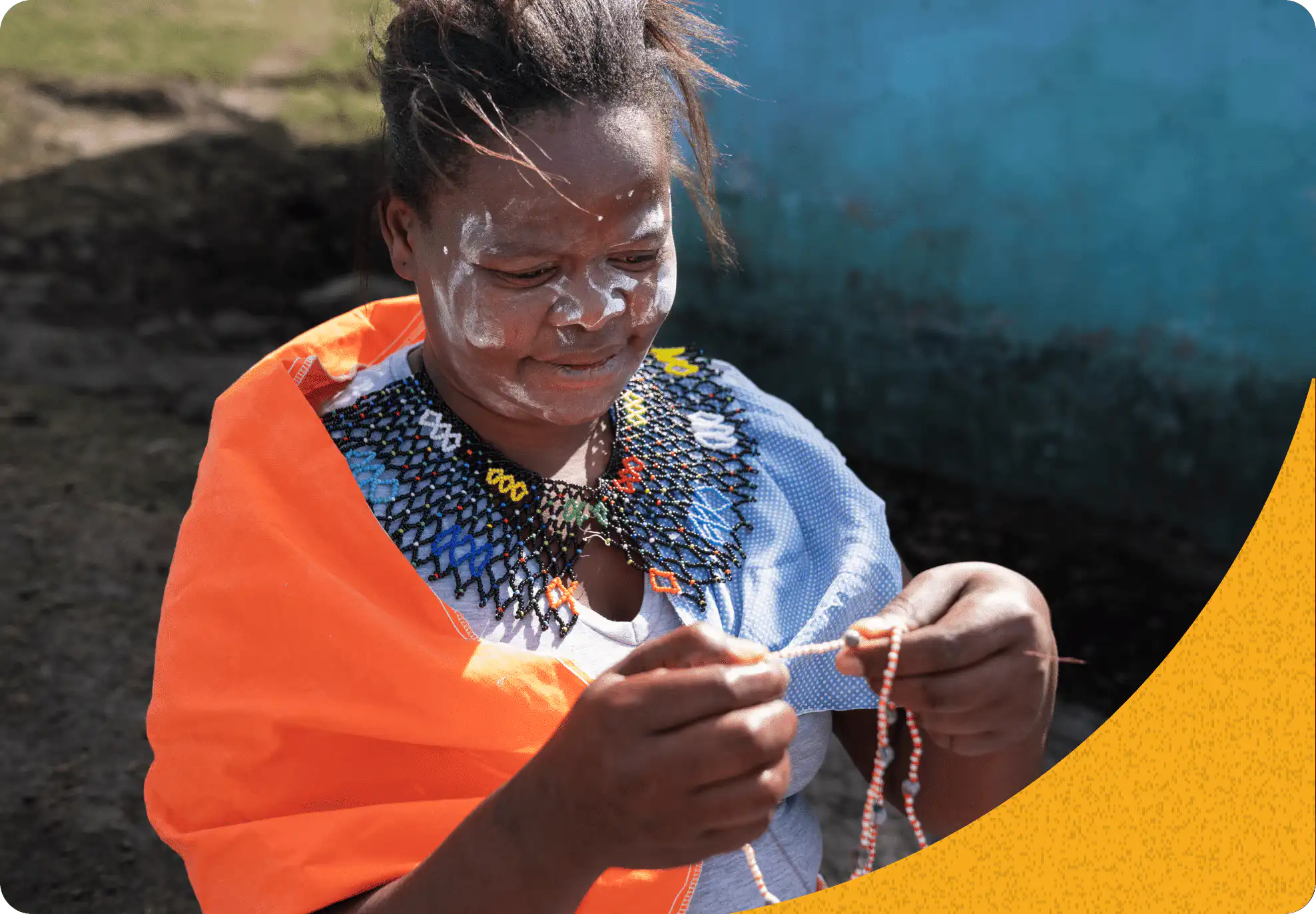
Situated on The Zebra Nature Reserve is a representation of a traditional Ndebele Village. The Ndebele were the original inhabitants of the area. As well as being a focal point for showing the traditional Ndebele culture, AAF partners with local Ndebele craftsperson’s to sell their craftwork through our curio shops where they benefit directly in association with AAF.

100% of every dollar donated to the Albatros
Foundation will be deployed to the field, ensuring
that every individual makes an impact toward saving
rhinos and other endangered wildlife.
Choose A Custom Amount:
We use cookies to improve your experience and analyse website traffic. You can accept all cookies or manage your preferences.
Choose which categories of cookies you allow. You can change your choice at any time from the Cookie Settings link in the footer.
These cookies are required for the website to function and cannot be switched off. They are usually only set in response to actions you take such as logging in or filling in forms.
Help us understand how visitors interact with the site by collecting and reporting information anonymously.
Used to deliver advertising more relevant to you and your interests across the web.